Brewed Logic
ServiceNow AI Digital Assistant — Architecture & Deployment Guide
"Enterprise-grade, AI-agnostic conversational intelligence"
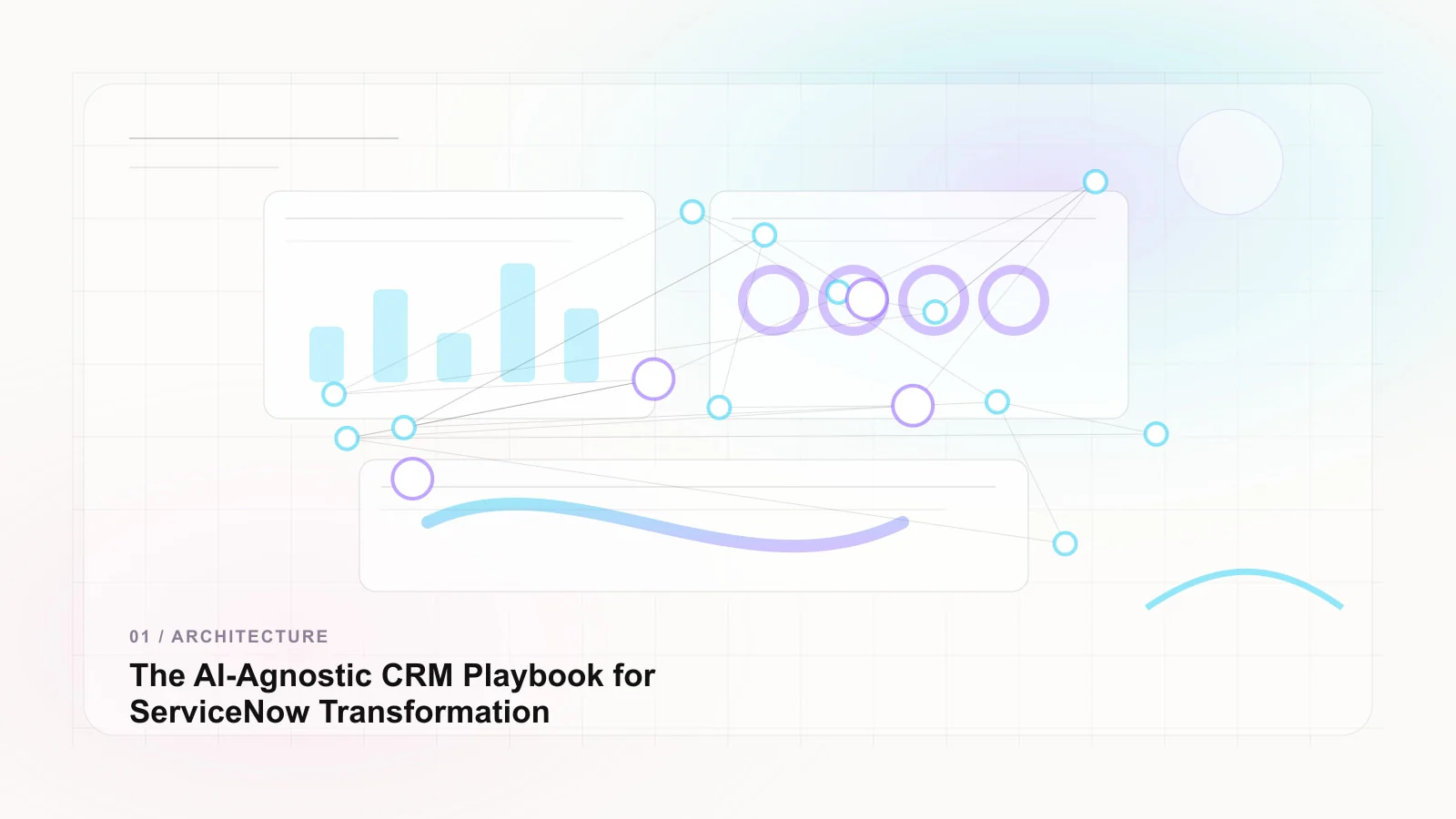
Single-vendor dependency creates strategic vulnerability for enterprises. When AI operates outside governance frameworks, compliance gaps emerge. One model cannot serve all enterprise needs, and shadow AI proliferates as teams bypass IT-approved tools.
"Enterprise-grade, AI-agnostic conversational intelligence"
01
The Problem: Enterprise AI Lock-In Crisis
Single-vendor dependency creates strategic vulnerability for enterprises. When AI operates outside governance frameworks, compliance gaps emerge. One model cannot serve all enterprise needs, and shadow AI proliferates as teams bypass IT-approved tools.
This evidence table sets the baseline for The Problem: Enterprise AI Lock-In Crisis, pairing each headline signal with the operational reality behind it before the solution is introduced.
| Signal | Context |
|---|---|
| 73% | of enterprises report AI governance as their #1 concern (Gartner) |
| 4 | critical risk areas: vendor lock-in, compliance gaps, limited flexibility, shadow AI |
02
The Solution: SNADA
SNADA — ServiceNow AI Digital Assistant
"Enterprise-grade, AI-agnostic conversational intelligence"
SNADA is not a chatbot. It is a strategic AI orchestration layer that liberates enterprises from vendor dependency while embedding governance directly into every conversation.
03
Architecture Blueprint
04
Layer 1: Interface Layer
This architecture table makes Layer 1: Interface Layer concrete, showing how Channel and Description fit together inside the operating model.
| Channel | Description |
|---|---|
| Virtual Agent (ServiceNow Native) | Native ServiceNow conversational interface with deep platform integration |
| Web Portal | Browser-based access with responsive design for desktop and tablet users |
| Mobile App | iOS and Android native applications with push notifications |
| API Gateway | REST/SOAP endpoints and Webhooks for third-party integrations |
Layer 2: Intelligence Layer — Multi-Model AI Orchestration
SNADA routes queries to the optimal AI model based on capability mapping, cost optimization, and intent analysis.
This architecture table makes Layer 1: Interface Layer concrete, showing how Model, Strengths, and Use Cases fit together inside the operating model.
| Model | Strengths | Use Cases |
|---|---|---|
| OpenAI GPT-4 | Complex reasoning, code generation | Technical analysis, scripting, advanced problem-solving |
| Anthropic Claude | Long context, safety | Document analysis, policy review, compliance checks |
| Google Gemini | Multimodal, search | Research, data synthesis, knowledge retrieval |
| Azure OpenAI | Enterprise security | Sensitive data processing, regulated industries |
05
Layer 3: Backend Data Fabric
This architecture table makes Layer 3: Backend Data Fabric concrete, showing how Data Sources, Knowledge Graph, and External Systems fit together inside the operating model.
| Data Sources | Knowledge Graph | External Systems |
|---|---|---|
| ServiceNow Tables | CMDB Relations | SAP |
| Incident Records | Asset Mapping | Salesforce |
| KB Articles | Service Trees | Workday |
| Change Records | Impact Analysis | Jira |
| User Profiles | Dependency Graph | Azure DevOps |
06
Layer 4: Governance Layer
This architecture table makes Layer 4: Governance Layer concrete, showing how Guardrails, ACLs, and Audit Trails fit together inside the operating model.
| Guardrails | ACLs | Audit Trails |
|---|---|---|
| Content Filtering | Role-based Access Control | Full Session Logging |
| Prompt Injection Defense | Data Masking | Token Usage Tracking |
| Bias Detection | Field Level Security | Compliance Reports |
07
Key Capabilities
This table translates Key Capabilities into a practical reference, organizing Capability, Description, and Impact so the section is easier to compare and act on.
| Capability | Description | Impact |
|---|---|---|
| Persona-Based Intelligence | Different AI personalities for HR, IT, Finance, Executive teams | 40% better adoption |
| Multi-Model Orchestration | Route queries to best AI model based on capability and cost | 35% better quality |
| Rapid Deployment | Pre-built templates deploy in days, not months | 60% faster time-to-value |
| Knowledge Synthesis | Combines KB, CMDB, and live data for contextual answers | 50% fewer escalations |
| Enterprise Governance | Built-in guardrails, audit, compliance validation | 100% audit readiness |
08
Business Impact
This scorecard summarizes the commercial and operational outcomes for Business Impact, keeping the most important gains easy to scan before moving back into the narrative.
| Impact area | Result |
|---|---|
| 60% / Faster Deployment / vs Custom Builds | 40% / Better Adoption / vs Generic Chatbots |
| 50% / Fewer Escalations / vs Basic Chatbots | 100% / Audit Ready / vs Shadow AI |
09
Use Cases
This reference table grounds Use Cases in everyday scenarios, linking the user request, the platform action, and the outcome a team should expect.
| Use Case | Scenario | Outcome |
|---|---|---|
| IT Self-Service | Employee asks "Why is my VPN slow?" SNADA checks CMDB, finds overloaded gateway, suggests alternative | Instant diagnosis |
| HR Onboarding | New hire asks "How do I set up 401k?" SNADA walks through portal, forms, deadlines | Guided journey |
| Executive Insights | CFO asks "What's our cloud spend?" SNADA queries tables, generates summary with trends | Real-time dashboard |
| Compliance Queries | Auditor asks "Show Q3 access reviews" SNADA pulls IRM data, generates report | Instant compliance |
10
Technical Specifications
This architecture table makes Technical Specifications concrete, showing how Component and Specification fit together inside the operating model.
| Component | Specification |
|---|---|
| Platform | ServiceNow Tokyo+ (Recommended: Washington DC+) |
| AI Models | OpenAI GPT-4, Anthropic Claude, Google Gemini, Azure OpenAI, Custom Models |
| Integration | REST API, SOAP, MID Server, IntegrationHub |
| Security | SOC 2 Type II, GDPR, HIPAA (configurable) |
| Deployment | Scoped App, Store-ready, Instance-safe |
| Scalability | Horizontal scaling via MID Server cluster |
| Languages | English, Spanish, French, German, Japanese |