Innovation
The Real ROI of Agentic AI Isn't the Agent — It's Platform Consolidation
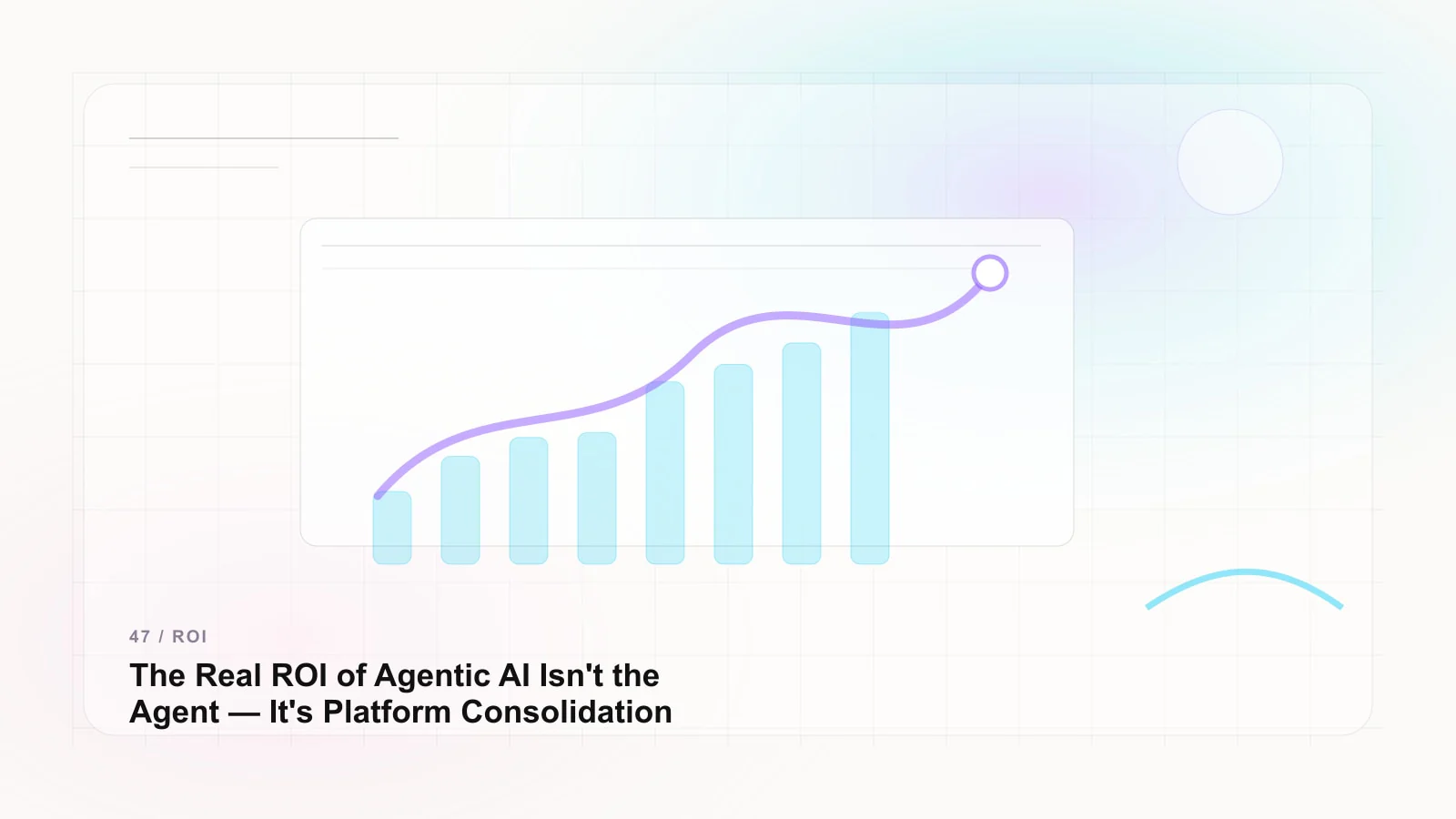
CFOs are getting skeptical of AI business cases built purely on "productivity uplift," and they're right to be. The more durable number is usually elsewhere: the cost of not consolidating.
CFOs are getting skeptical of AI business cases built purely on "productivity uplift," and they're right to be. The more durable number is usually elsewhere: the cost of not consolidating.
Two compounding effects. First, automation value — deflection rates above 50% and resolution-time reductions seen in large enterprises on Now Assist. Second, and often larger, consolidation value: every additional point tool is its own license, integration, governance gap and stale data source. When AI Control Tower governance has to span 30+ third-party systems, that sprawl isn't just cost — it's the surface area of your risk.
Meta title: Agentic AI ROI: The Consolidation Economics 2026 Meta desc: The biggest agentic AI return often isn't automation — it's collapsing a tool sprawl into one governed platform. How to model the real TCO. Primary kw: agentic AI ROI consolidation · Secondary: platform consolidation TCO, ServiceNow business case, tool sprawl cost, AI governance economics Slug: /agentic-ai-roi-platform-consolidation
The under-modeled line is the one that's quietly bleeding: the human glue. The people reconciling asset data across Flexera and spreadsheets, the swivel-chair between CRM and operations, the SOC analyst hand-carrying an incident into a change tool. Consolidation doesn't just cut licenses — it deletes labor that exists only because the tools don't talk.
And the cost AI itself introduces, which must be in any honest model: runaway model spend is a real pain of the agentic era — which is why ServiceNow added cost tracking and ROI dashboards to AI Control Tower. A credible business case is net of consumption, not gross of optimism.
The honest call. Don't lead a board case with "AI will make us faster." Lead with "here is the tool sprawl, the integration tax, the reconciliation labor, and the governance gaps it creates — consolidation removes them, and agentic AI is the multiplier on top." Net of model spend. That's the number that survives the CFO.
[CTA: Get a consolidation-led TCO model, not a productivity-uplift slide.]